
Doing Science with an AI Colleague: Collaboration, pitfalls, possibilities, and mental models
Event Details
At 10:00 am (Germany time), on October 5th, we are pleased to welcome Dr. Daniel M. Russell, Principal Scientist at Google.
Abstract
The role of AI in scientific research is undergoing a fundamental shift, moving from passive data-processing tools to active, autonomous collaborators. As AI systems become capable of deep reasoning and autonomous experimental design, understanding how human scientists think about, interact with, trust, and understand these AI co-scientist systems is critical.
This talk explores the intersection of human-AI interaction and AI through two distinct lenses. First, we will examine the architecture and capabilities of systems like Google’s AI Co-Scientist. Built on a multi-agent framework with Gemini, Co-Scientist simulates the scientific method to act as a virtual peer. By leveraging specialized agents (such as the Generation, Reflection, and Evolution agents) that are coordinated through a “tournament of ideas,” the system parses vast amounts of literature to propose, debate, and refine novel, testable research hypotheses.
However, the success of such powerful agentic systems depends entirely on the human in the loop. The second half of this talk unpacks the mental models scientists use when working with AI collaborators. Do researchers view these systems as infallible oracles, basic search tools, clever workhorses, or just as junior peers? We will discuss how misaligned mental models can lead to automation bias or algorithm aversion, and explore how we can design AI systems that actively help users build accurate, calibrated models of the AI’s capabilities and limitations.
Ultimately, this seminar proposes that accelerating scientific discovery requires more than simply scaling compute for the AI or engineering better objective functions; it also relies on designing AI systems that align with human cognition, their mental models, while working in a safe, trusted, and highly productive scientific partnership.
Guest Biography
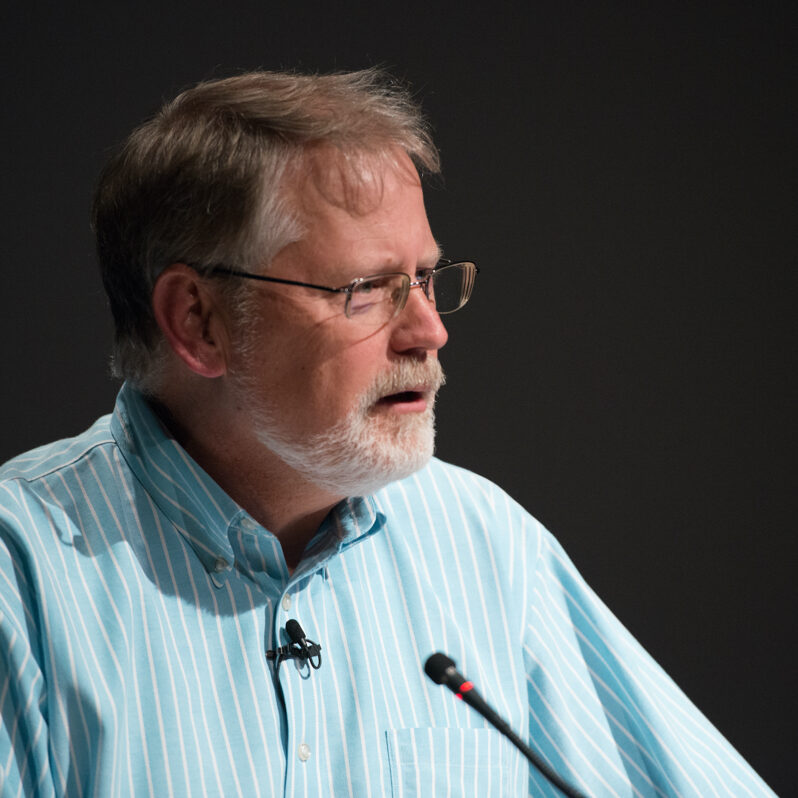
Dr. Daniel M. Russell has been working in Artificial Intelligence and Human-Computer Interaction for nearly 40 years. He has worked at several of the top technology innovation companies in Silicon Valley (Google, Apple, Xerox PARC, IBM) and has been at the forefront of many of their inventions. He was in the core search engineering team at Google for over 17 years and is now working on the Google Deep Mind “Co-Scientist” project to build an AI science collaborator. He currently teaches in the Human-AI group at Stanford’s Computer Science department and at the University of Zürich. He has written over 200 technical articles for professional journals as well many articles for the popular press. His most recent book, The Joy of Search: A Google Insider’s Guide to Going Beyond the Basics, is now out in paperback. Dan has taught over 1,000 classes in-person in venues ranging from 4th grade classes to professional classes for reference librarians at the Library of Congress. He has been on the faculty at Stanford, the University of Maryland, the University of Zürich, Santa Clara University, UC San Diego, and serves on multiple boards of information schools. His online classes have been watched by millions of students for an accumulated YouTube watch-time of > 450 years.
More Information
Speaker webpage: https://www.linkedin.com/in/dan-russell-6901a9
Event image by Gemini